
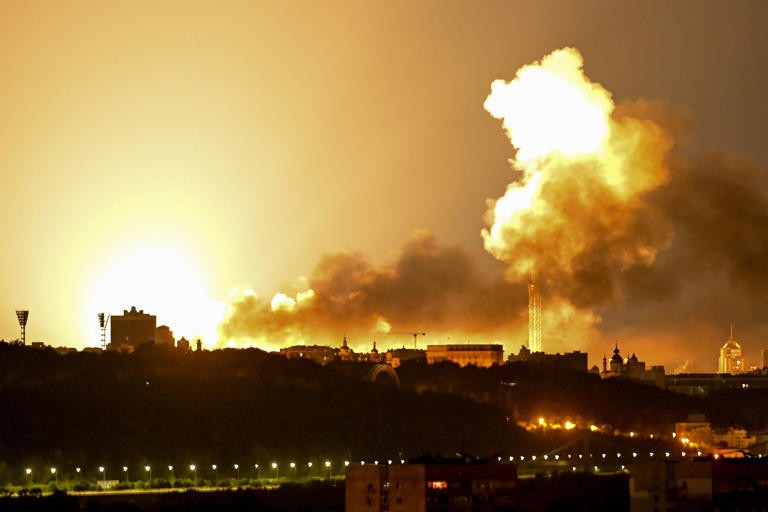
Our latest MDAA report in our spotlight series on Drone and Missile Warfare
5 Key Points
- Over the past month, Russia and Ukraine have exchanged large-scale missile and drone attacks on military, defense critical infrastructure, and civilian infrastructure in their national capital regions.
- These exchanges indicate we are in an era were high-end and low-end unmanned aerial systems in the hands of major or regional powers enable the employment of non-nuclear strategic strikes against military or dual-use targets in capital regions.
- These targets relate to military objectives, but each side’s intent is a mix of revenge, retaliation, and coercion.
- The exchanges provide three basic planning scenarios for testing the performance of national capital region defenses:
- High End Threat: The combined large-scale use of multiple missile types (ballistic, cruise, or hypersonic) and attack drones targeting sites within the boundaries of a capital region.
- Low-End Threat: Large-scale drone attacks against similar targets within the same boundaries; while less destructive, these attacks can still stress defenses, especially if continued technology advances in attack drones outpace fielding of effective countermeasures and mitigations.
- Lesser-Included Case: A predominately electronic-warfare based defense against missile and drone attacks.
- These attacks remind us of the critical importance of constructing national capital region defense architectures that are truly integrated—to include integration of active and passive military defenses, interagency coordination, civil-military collaboration, liaison with law enforcement, and ultimately civil defense and emergency management organizations.
Click here to read the full report
Winners Associate with Winners to Win
Fight On!