
“Victory at all costs, victory in spite of all terror, victory however long and hard the road may be; for without victory, there is no survival.”
– Winston Churchill
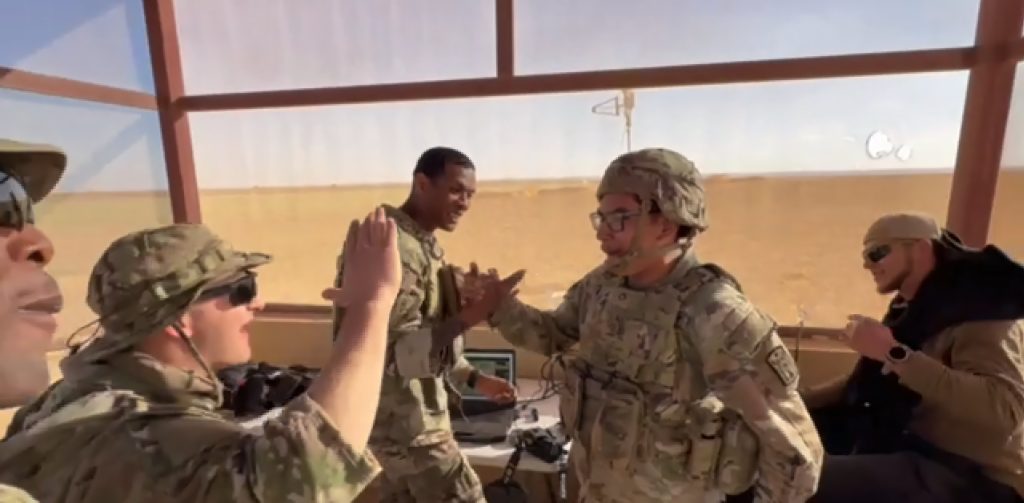
The thrill of victory is so special and so beloved because it is real. You see it in the raw emotion of Soldiers after a successful shoot-down, in the instant recognition that their training, discipline, and determination have preserved lives and defended something vital. In the relentless pursuit of defeating Shahed drones, every victory counts, and every attempt counts.
Across the Middle East, our Counter-Drone Force is rapidly innovating, training, equipping, and manning forward in the defense of our bases, our people, and our mission. This fight is not theoretical. It is a critical, vital, and absolute necessity.
Churchill understood something that history often overlooks when it celebrates battlefield triumph: victory is rarely born at the moment of contact. It is built long before the first Soldier steps onto the battlefield. Britain did not endure because courage suddenly appeared in 1940; it endured because leaders set the conditions for courage to matter. They built resolve before the crisis peaked. They established clarity of purpose before the first decisive engagements were fought. They created the political will, national unity, industrial momentum, and strategic vision that allowed brave men in uniform to do what was required when the test came. In the same way, General CD Donahue is setting the conditions today by driving a culture of innovation that refuses complacency and compels the entire formation to pursue creative solutions quickly, aggressively, and decisively. He is shaping an environment in which speed matters, adaptation is expected, and audacity is not an exception but a requirement.
Once those conditions were set, Britain’s famed field marshals and commanders were able to execute with clarity and effect. The same is true now. Once the climate is established, once leaders make clear that innovation is not optional, that speed matters, and that solving hard problems in contact is the standard, the officers driving that change can move with purpose. Those officers are already doing exactly that.
Led by the CENTCOM-directed Task Force commander, COL Hailey Bairu of the 52nd ADA Brigade, and resourced by JIATF 401 and GTIDS, this effort is bringing together the Army’s newest capabilities, from non-programs of record to established programs of record, to be placed in the hands of Soldiers, trained under realistic conditions, and applied where they are needed most. It is a model rooted in urgency and purpose: identify the threat, find the capability, put it in the hands of warfighters, and close the gap faster than the enemy can exploit it.
COL Chris Hill, GTEADS Director, brings the acquisition acumen necessary to rapidly deliver systems to the point of need, translating urgency into action and capability into presence forward.
COL Andrew McCollum, CCJ39 and COL Sam Kline, JIAATF, are helping create the framework that allows disparate efforts, technologies, and stakeholders to converge into a true battle lab, one where ideas can be tested quickly, refined under realistic conditions, and then pushed forward for operational use.
COL Pete Erickson, USAR DG3, is driving the conventional resources forward to meet the demands of the testers on the line, ensuring that innovation is not just imagined in concept, but supported in execution.
Together, these leaders are doing more than fielding equipment. They are operating in CD’s ecosystem in which adaptation becomes routine and battlefield relevance is accelerated.
And that is the point. Victory is never rooted in a single moment, a single interception, or even a single system. It is rooted in an environment. It grows where leaders encourage initiative, where organizations reward intelligent risk, and where Soldiers know they are trusted to test, fail, adjust, and succeed faster than the enemy can react. One can imagine a young Soldier on a dusty Middle Eastern outpost, standing behind a newly fielded system that did not exist in that formation months earlier, engaging a live threat with the confidence that comes only from hard training and empowered leadership. The shoot-down itself may last seconds. The celebration may last minutes. But that victory was months in the making—built by commanders like CD and Pat Frank who foster innovation, by teams who delivered capability at speed, and by a culture that rewarded audacity over inertia. That is how victory is made. Not merely by brave execution at the point of contact, but by leaders who set the conditions so that when the decisive moment comes, success is already within reach.
In war, the world often sees the interception; it rarely sees the culture, leadership, and audacity that made it possible. But that is where victory begins.